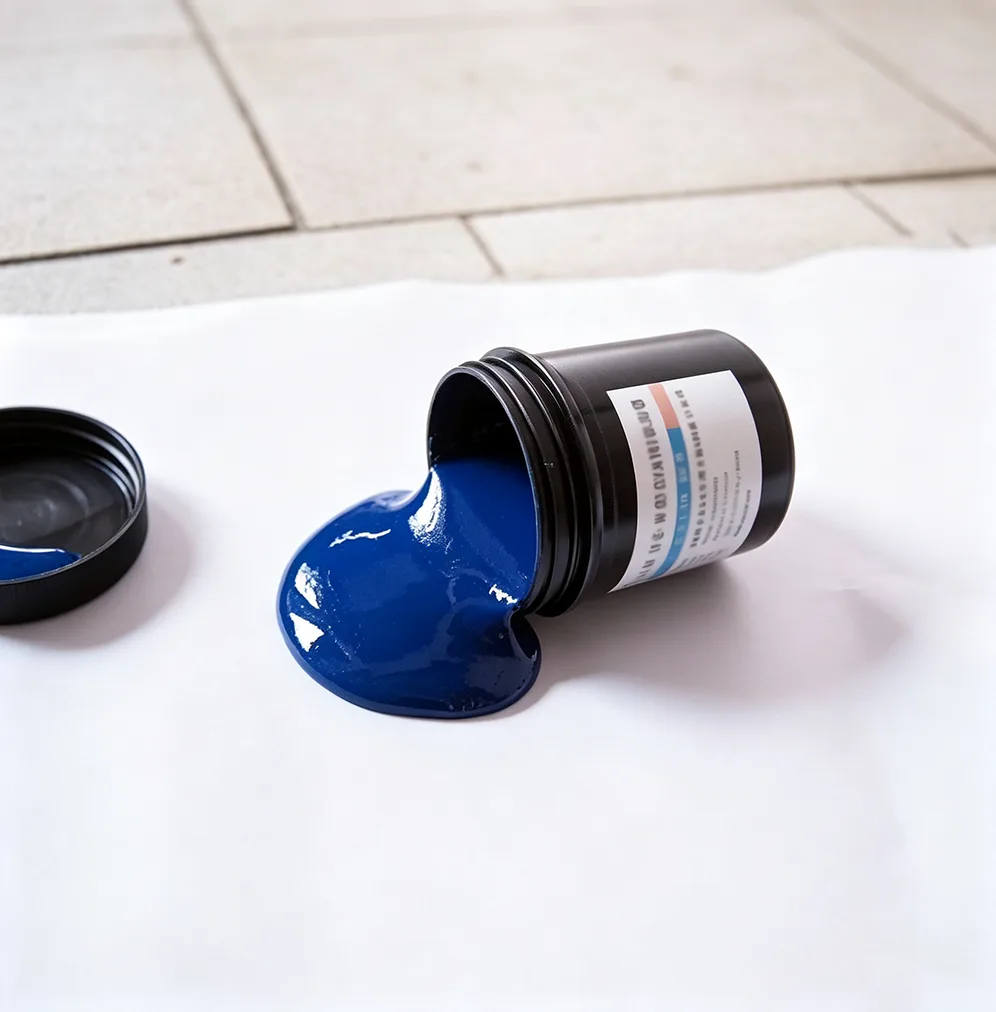
Photosensitive Ink Coating Machine — 430 to 1330 mm, Single or Double Side
Industrial roller-type photosensitive ink coater for metal etching and electroforming. Achieve uniform 10-40μm coatings at 20m/min for precision pattern transfer.
Photosensitive Ink Coating Machine for Metal Etching & Electroforming
Precision roller-type photoresist applicator for industrial pattern transfer.
photosensitive ink coating machine for metal sheet etching & electrforming
Advanced Coating Technology for Metal Processing
Our roller-type photosensitive ink coating machine delivers precision photoresist application for metal etching and electroforming processes. Engineered for industrial-scale production, this system features:
Threaded precision coating rollers for uniform ink distribution
Single-side or double-side — double-side coats both faces in one pass
Robust transmission mechanisms with gear-driven reliability
Built in 430, 630, 730, 830, 1030 and 1330 mm coating widths — on a roller face up to 1400 mm
Seamless integration with etching/electroforming production lines
This versatile solution is also compatible with PCB solder mask applications, providing consistent results across various substrates.
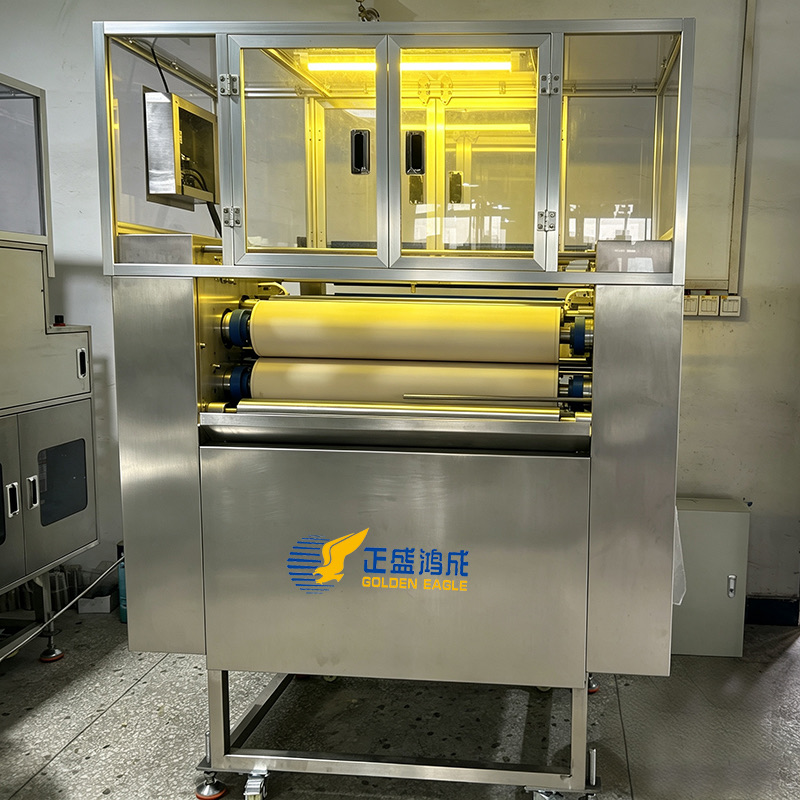
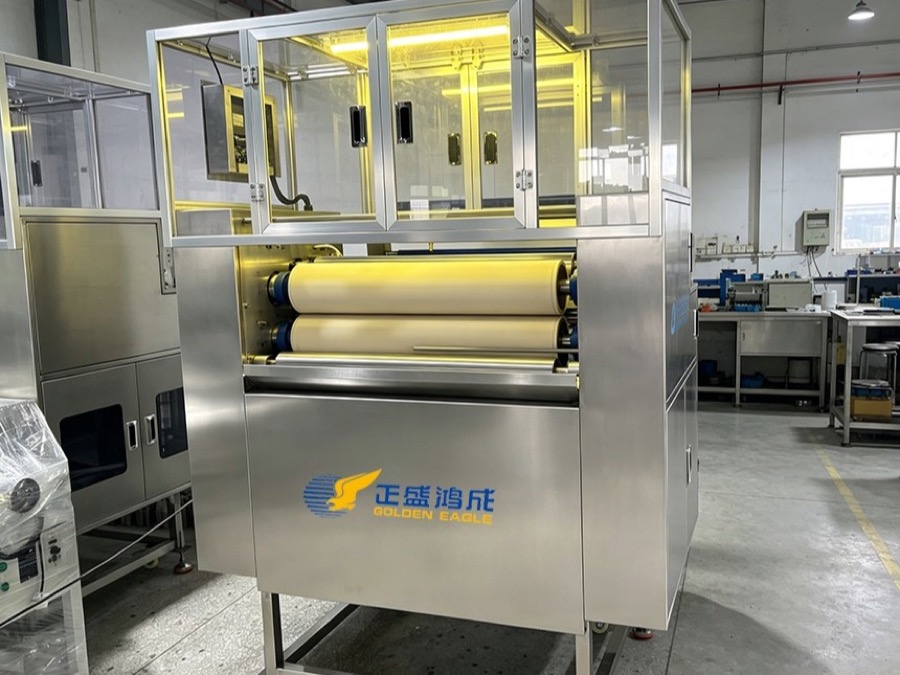
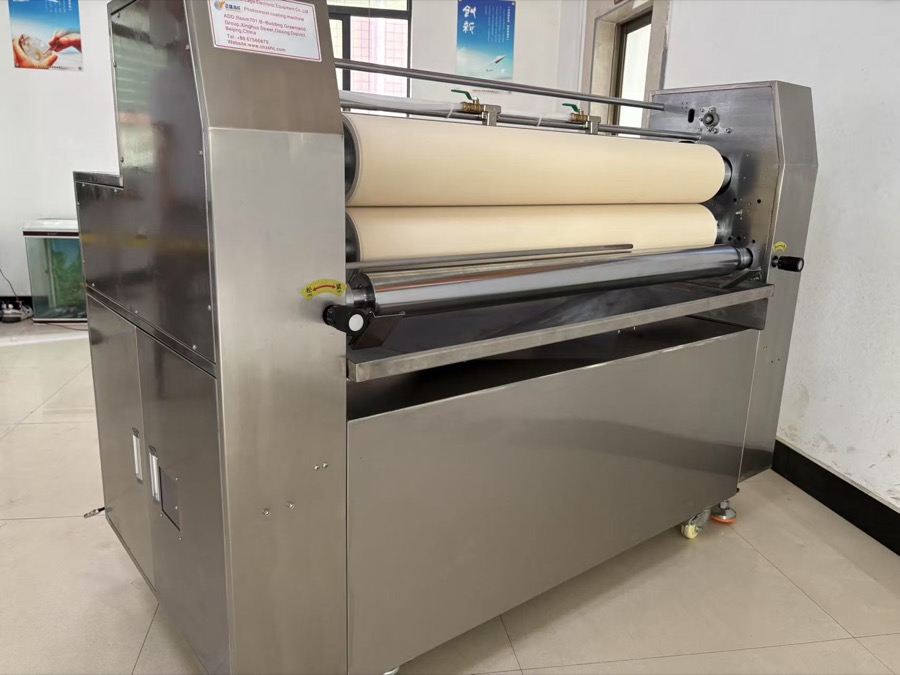
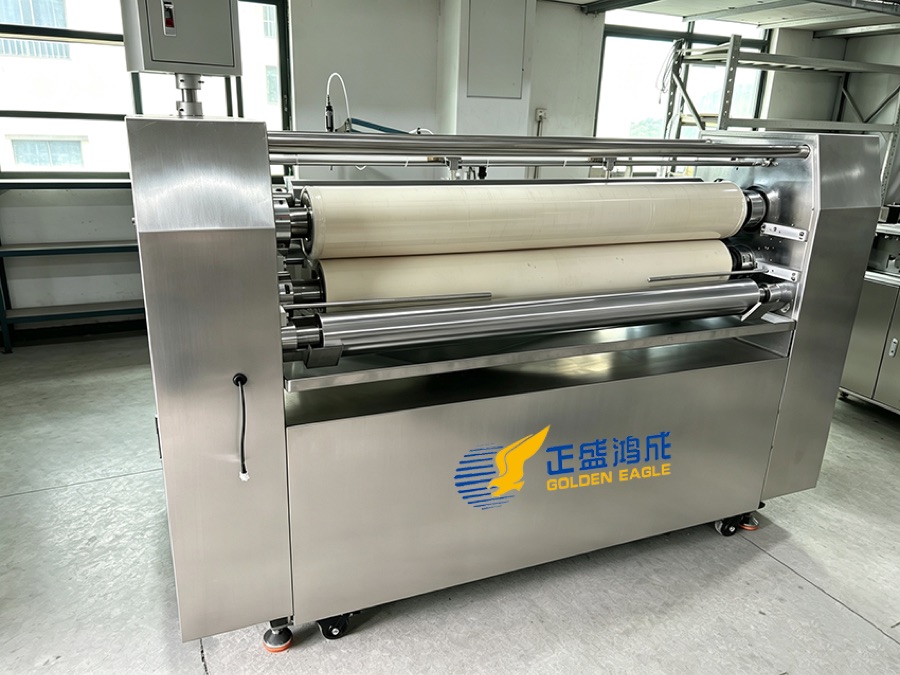
Enclosed build — the coating chamber is guarded and lit, so the operator can watch the film go down without reaching into the nip.Roller set with the ink tray below — ink that is not transferred drains back and is pumped round again.Coating a metal sheet — plate travel and roller rotation run in the same direction, which is what keeps the film even.
Sizes and Specifications
This machine is not one model. It is a range, built in six coating widths — 430, 630, 730, 830, 1030 and 1330 mm, and the model number is that width — and each size can be supplied as a single-side or a double-side coater. Double-side machines coat both faces in one pass; single-side machines coat one face, which is what most nameplate, signage and decorative work needs.
Picking your size
Choose from your widest sheet, not your average one — the coating width is the hard limit.
Choose double-side if you etch through from both faces (filter mesh, cutting dies, through-etched parts) or run PCB inner layers.
Choose single-side for nameplates, signage and decorative panels, where only the face is etched.
Beyond the six standard widths we also build 1200 and 1500 mm working widths to order.
All Six Widths at a Glance
Parameter
TB430
TB630
TB730
TB830
TB1030
1330 wide
Max. coating width
430 mm
630 mm
730 mm (from 100 mm)
830 mm
1030 mm
1330 mm
Board thickness
0.2–3 mm
0.2–3 mm
0.3–5 mm
0.2–3 mm
0.2–3 mm
0.5–7 mm
Ink film thickness
10–25 µm
10–25 µm
10–25 µm
10–25 µm
10–25 µm
10–25 µm
Film uniformity
±2 µm
±2 µm
±2 µm
±2 µm
±2 µm
±2 µm
Speed
0–7 m/min
0–7 m/min
0–12 m/min stepless
0–7 m/min
0–7 m/min
0–8m/min
Power
0.5 kW
0.75 kW
0.5 kW
0.9 kW
1.2 kW
2 kw
Supply
220 V / 50 Hz
220 V / 50 Hz
Air pressure
0.6 MPa
0.6 MPa
Coating roller
108×430
108×630
Ø115×730
108×830
160×1150
Ø180×1400
Second roller
—
—
Ø89×750 stainless doctor
—
—
Ø180×1350 backing roller
Feeding height
880 mm ±50
—
880 mm ±50
—
Overall dimension
990×800×1160
1190×800×1160
1328×880×1429
1390×920×1160
1100×1755×1525
2188×909×1726
Weight
200 kg
240 kg
280 kg
350 kg
500 kg
850 kg
Coating method
Single or double side two versions
Single or double side two versions
Single or double side two versions
Single or double side two versions
A dash means our document for that build does not state the figure — ask us and we will confirm it against the drawing for your machine, rather than quote another model's number. Sources: roller coating machine quotation no. 20250501 (TB430 / TB630 / TB830 / TB1030), LY-115-730 single- and double-side technical specifications (TB730), LY-180-1400 manual (1330 wide). Beyond these six we also build 1200 and 1500 mm working widths to order.
The 1 m machine (TB1030 class) — stainless body, touch-screen HMI on the operator side, levelling feet and castors.The roller set — coating roller, backing roller and the stainless doctor roller below, with the ink feed line and a nip adjuster at each end.
What Is Different About the 1330 mm Machine
For architectural sheet, lift panels and other wide decorative stock, the wide-body machine takes the coating roller out to a full 1400 mm face. Three things set it apart from the smaller builds:
Two independent drives. Conveying (0–13 m/min) and coating (0–8 m/min) are driven and set separately on the HMI, so feed rate and coating rate are not locked together.
Twin stepper lift. The coating roller is raised and lowered by a stepper motor at each end, so the nip stays parallel right across 1.4 m — the thing that is hardest to hold on a wide machine.
Thicker stock. 0.5–7 mm, against 0.2–3 mm on the TB machines.
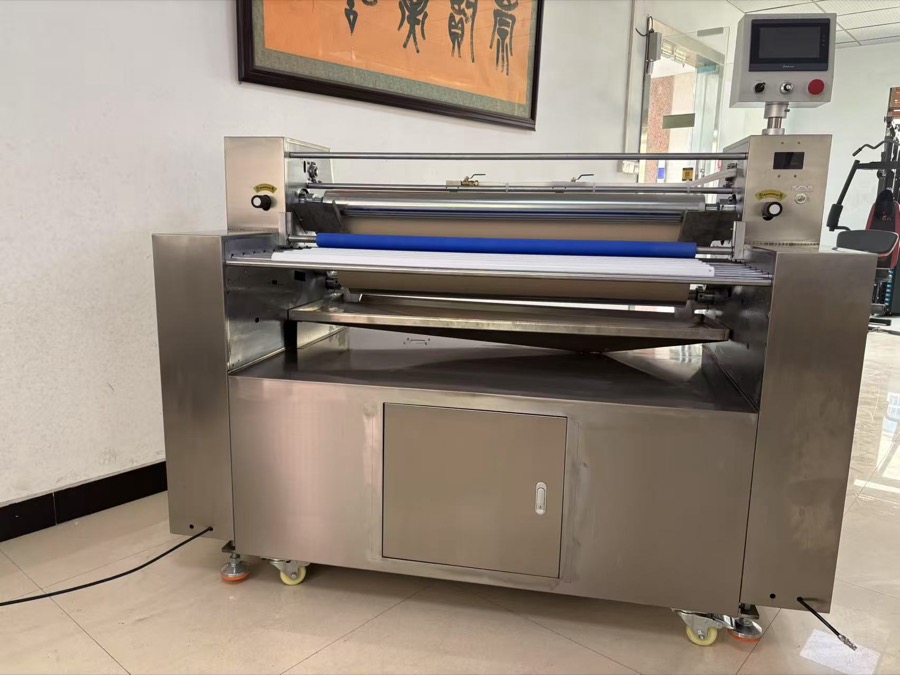
The doctor blade is set by a handwheel on the operator side for fine gap and pressure adjustment; conveyor rollers are fine-ground white PP so they do not mark the face; control is PLC plus touch screen; the machine stands on adjustable feet with castors for levelling and relocation.
Structure and drive data from our LY-180-1400 coating machine manual, V1.0 (single-side build). Rated voltage, rated power and air connection are confirmed against the electrical drawing supplied with your machine.
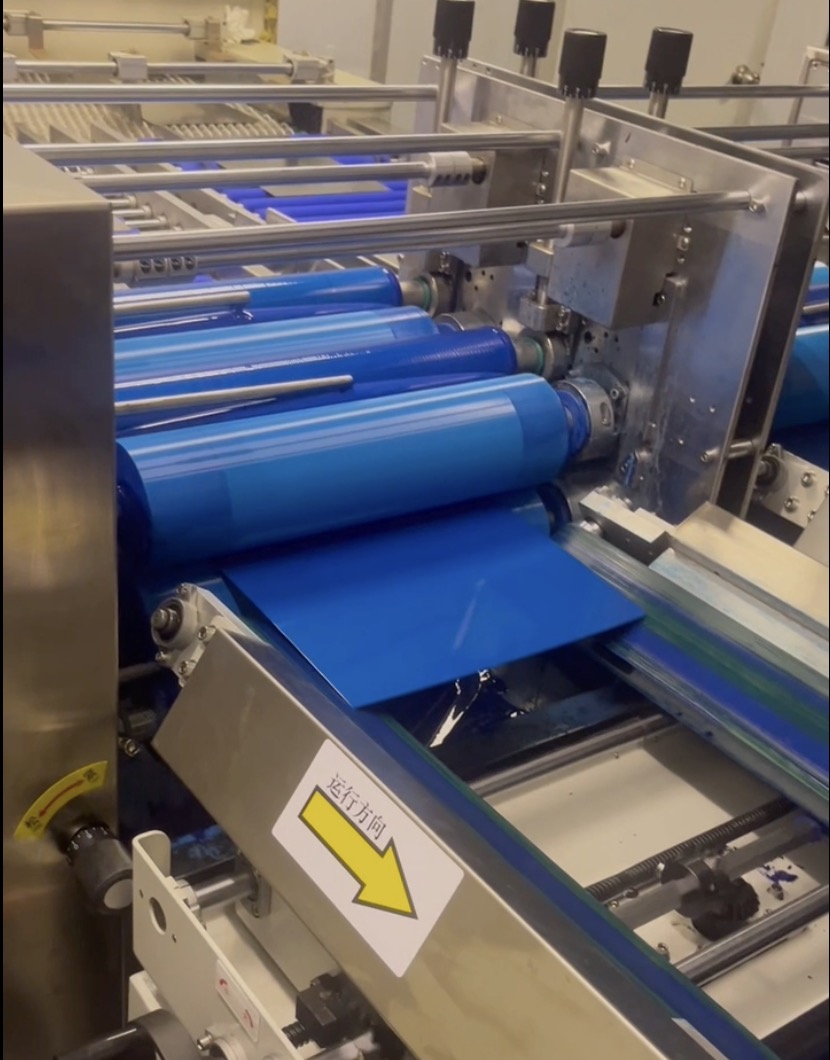
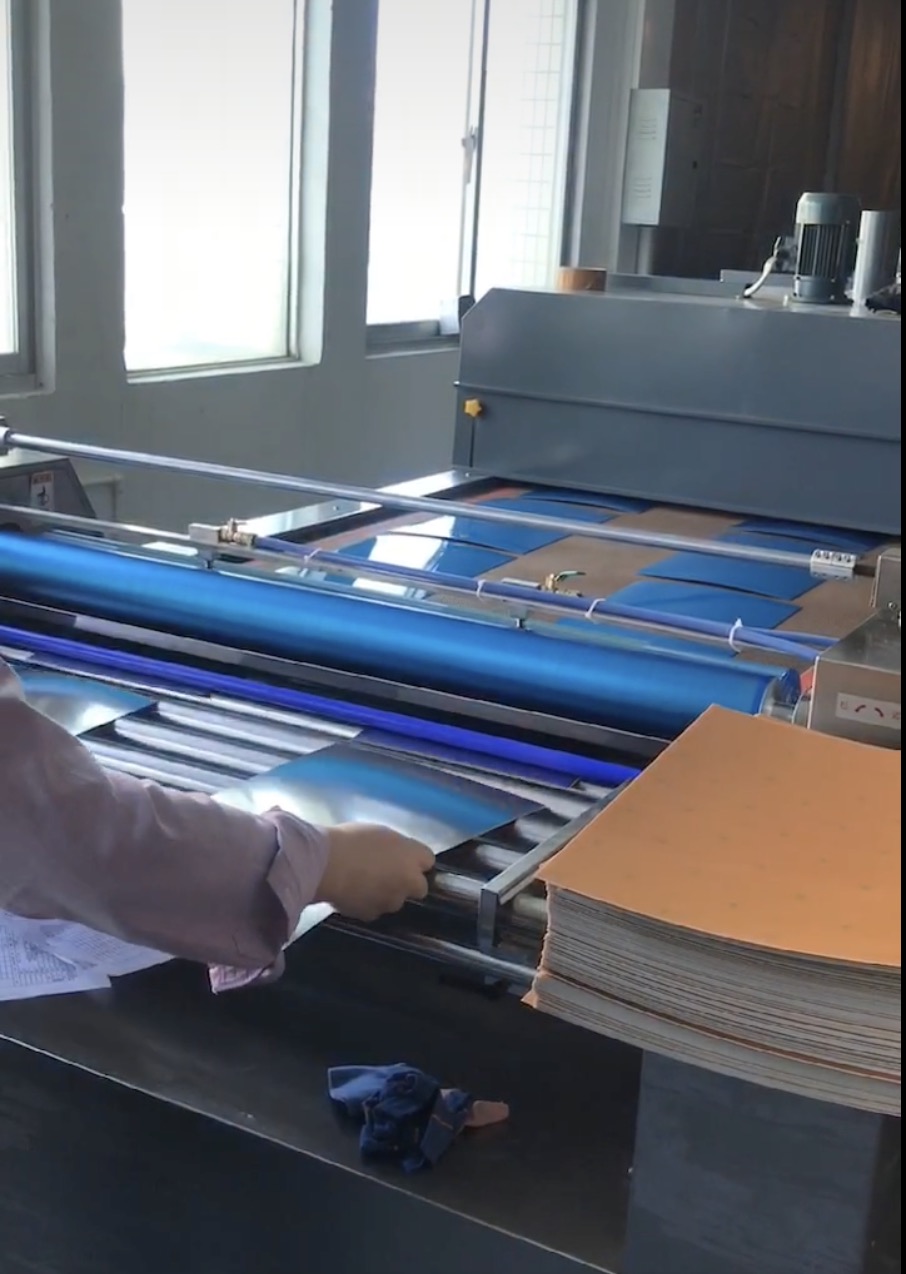
The 1330 mm wide machine — the roller face runs the full width of the frame, with a nip adjuster at each end and the control box on a post beside the operator.In production — sheet is fed in by hand, comes off the rollers with an even blue resist film, and goes straight into the drying tunnel behind.
What Is Different About the 730 mm Machine
A compact single-set-roller machine built in both a single-side and a double-side version on the same frame. Two things set it apart:
A dust-removal roller ahead of the coating zone. It lifts dust and debris off the board before the ink goes on, which is what cuts pinholes and inclusions in the film — worth having on fine-line work.
A stainless-steel doctor roller (Ø89×750, 6005zz bearings) meters the ink off the coating roller. Stainless keeps its rigidity and does not corrode in long service.
Speed is stepless through an inverter; conveyor rollers are Ø22 mm silicone, elastic enough to grip without scratching, which keeps thin boards running straight. The frame is welded square tube with an enclosed lower cabinet for the drive and electrics, on castors. Ink is fed by the air-driven double-diaphragm pump described below.
Source: LY-115-730 single-side and double-side technical specifications, V1.0.
What the Coating Section Delivers
Film thickness range
8 – 25 µm (photoresist)
Film uniformity
0 – 2 µm
Coating speed range
0 – 8 m/min
Ink utilisation
All — ink is recovered from the waste tray by filter pump and returned
Ink storage
5 L
Coating wheel life
About 3 months, or 30,000 m²
Ink viscosity required
Normal viscosity — tell us the ink you run and we set the machine to it
Ink Circulation Pump
Ink is fed and recirculated by an air-driven double-diaphragm pump — no electric motor in contact with solvent, so it is explosion-proof, corrosion-resistant and does not foam the ink. Operating air 0.15–0.8 MPa, maximum flow 18 L/min, maximum viscosity 1,000 cP, suction lift up to 3 m, medium ports G1/2″, air inlet G1/4″. Diaphragms, valve piston rings and shaft seals are wear parts, replaced every 6–9 months of continuous running.
Main Components
PLC and HMI from Shenzhen display control; air switches, relays and contactors Delixi; switching power supply Mean Well (Taiwan); pneumatic valves and solenoids Shanghai SNS; stepper drive for the roller lift; Xiamen Jingyan 200 W drive motor and 25 W mixing motor; HIWIN linear guides on the 730 machine. Input supply AC 220 V.
Keeping the Film Right
Film thickness is set by the roller nip. Two or more rollers with a controllable gap meter the ink; squeezing the rollers closer or further apart changes the film. Fine adjustment is by extrusion screw and dial indicator.
Board thickness is dialled in separately. A horizontal fine-tuning system sets the machine to the plate you are running, so different thicknesses all reach the same coating result. On the wide machine you key the board thickness into the HMI and the head finds its zero.
Plate travel and roller rotation run in the same direction, which is what keeps the film even rather than dragged.
Imported coating rubber with a special surface layer gives both the transfer quality and the service life.
Clean only with the thinner your ink maker specifies. After flushing, wipe blades and rollers with lint-free paper, do not let solvent pool on a roller, and leave the machine idling 5–10 minutes. Release the blade and roller pressure before shutdown so nothing takes a set.
Lamination film temperature:50℃-150℃±2℃ Adjustable
Outsize:L830mm×W 1125mm×H1520mm
The Dry Film Photoresist Laminator is used for the lamination of photosensitive film and solder mask on PCB or other substrates. dry film roll laminator Pressure and speed can be adjusted according to different materials.
This machine is a roller-type photosensitive ink coating machine. You can use this machine to finish single side or double side coating work. Coating roller wheel surface with precision screw thread.
This machine is a roller-type photosensitive ink coating machine. You can use this machine to finish single side or double side coating work. Coating roller wheel surface with precision screw thread.
Coating film thickness range(solder resist): 15-25um
Coating speed range: 0-8 meters
The Solder Mask coating machine is used for apply a protective solder mask layer onto the surface of the PCB.The solder mask is a crucial part of the PCB fabrication, helping to prevent solder bridges, reduce corrosion, and improve the overall durability of the circuit board.
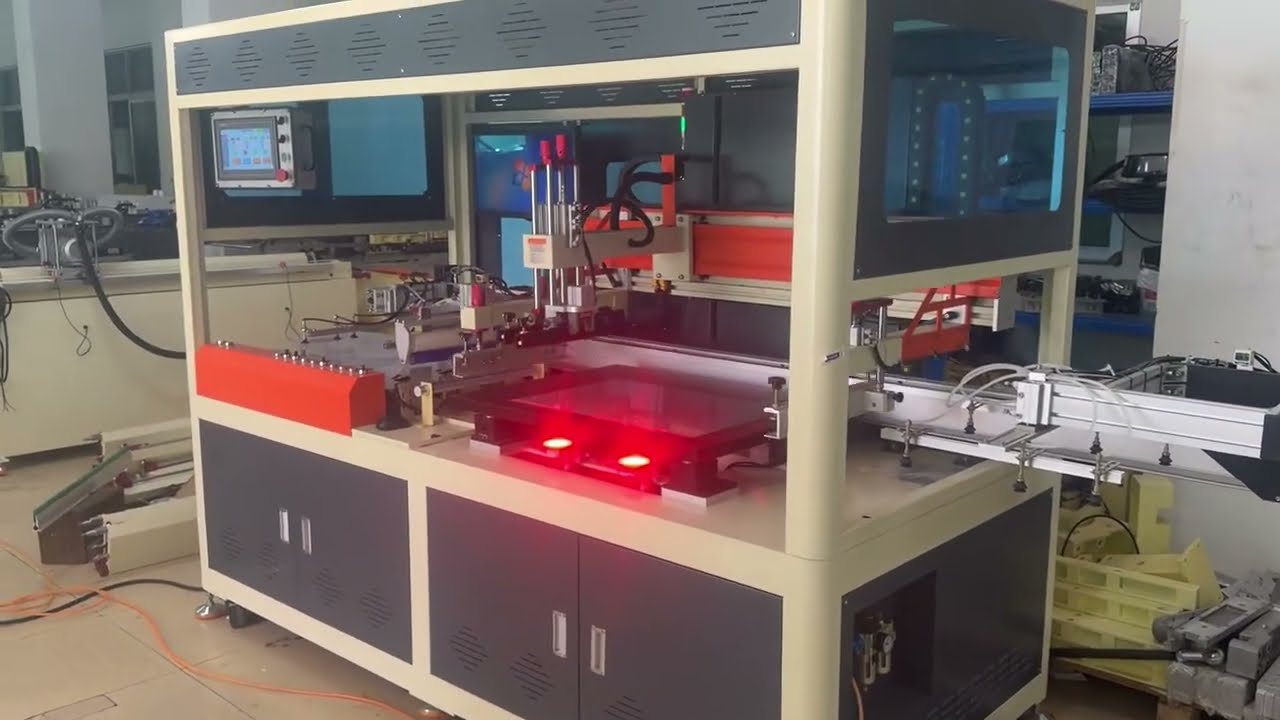
Screen printing Screen printing Machine Scope of application: It is suitable for plane printing of glass, optical disc, nameplate, adhesive, credit card, ceramic paper, Wooden Toy Puzzle, PCB, solder mask printing , photoresist printing,SMT solder paste, film switch and other products in electronic industry, as well as for plane printing of products with gold and silver card paper, metal sheet, PVC and other base materials and high overprinter precision requirements.
Printing area size: W650mm*L650mm(SIZE CAN BE ORDER)
print thickness: 0.1~15mm
screen frame size: 1100*1100mm (max)
It is suitable for double side PCB, multiple layer PCB, PISM green ink print, lengend print, line print, monochrome and multicolor alignment printing of various film switches, FPC, pet, PC, conductive films, etc.
Photoresist Coating Machines for PCB and Metal Etching Industries Technology Explained
Photoresist coating machines apply light-sensitive layers to substrates, enabling precise pattern definition for circuit imaging and etching processes. These systems are vital for achieving high-resolution designs in electronics and metalwork, with variations including dry film laminators, liquid photoresist coaters, solder mask applicators, and silk screen printers.
Key Features of Modern Coating Systems:
Modern photoresist coating machines incorporate advanced technologies such as precision applicators, automated thickness control, temperature-regulated environments, and integrated drying systems. These features ensure uniform coating consistency, reduced chemical usage, and high-throughput production, supporting stringent quality standards in industrial applications.
Applications in PCB Manufacturing:
Dry Film Laminator: Bonds dry film photoresist to copper-clad layers for inner and outer circuit pattern imaging, ensuring reliable adhesion and minimal defects in multi-layer boards.
Liquid Photoresist Coating: Applies liquid resist for ultra-fine patterns in high-density interconnect (HDI) and advanced PCBs, enabling high-resolution features essential for compact devices.
Solder Mask Coating Machine: DDeposits solder mask layers with precise openings for component soldering, protecting copper traces and enhancing board durability against environmental factors.
Silk Screen Printing Machine: Prints legends, identifiers, and markings on PCB surfaces using screen-based techniques, facilitating component placement and traceability in assembly.
Applications in metal etching:
Precision Pattern Transfer: Coats photoresist on metal substrates to reveal intricate designs for jewelry, decorative items, and industrial components before acid etching.7
Industrial Marking & Labeling: coating photosensitive material for Transfers logos, serial numbers, and safety markings onto metal surfaces for tools, machinery, and equipment plates.
Artistic Metalwork: coating photorseist for Develops complex patterns on copper, brass, and silver sheets for handmade crafts, sculptures, and architectural elements.
Tool & Mold Manufacturing: coating photosensitive material Develops micro-patterns on cutting dies and embossing tools for leather, textiles, and packaging industries.