

Metal Etching Equipment Range
Metal Etching Machines and Equipment for Industrial Manufacturing
Golden Eagle manufactures metal etching machines and metal etching equipment for industrial chemical etching of stainless steel, copper, brass, aluminium, titanium and other metals.
Our range covers conveyor spray etching lines, precision chemical milling systems, laboratory etching stations, multi-chamber machines for long workpieces, and specialised solutions for flexible cutting dies, hot foil stamping dies and decorative metal panels.
CE Certified
24h Quotation
1-Year Warranty
Worldwide Delivery
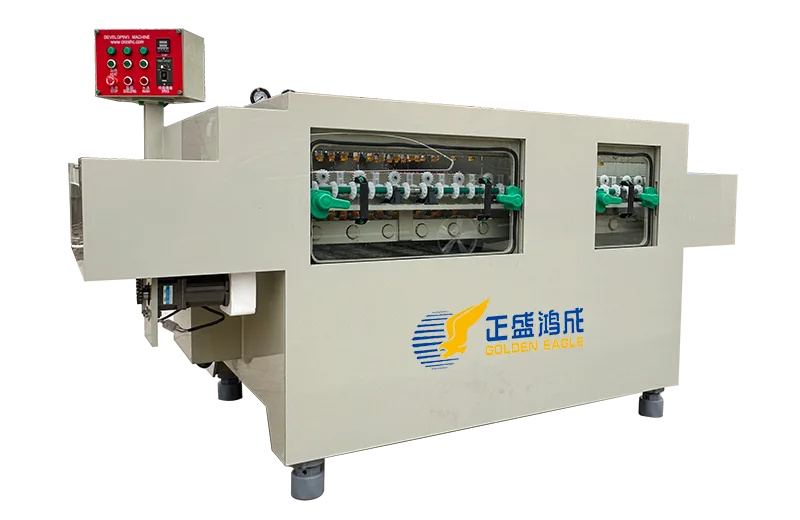
Overview
Metal Etching Equipment Overview
What a metal etching machine does, how the process works, and where Golden Eagle equipment sits in a production line.
A metal etching machine is an industrial system that removes selected areas of a metal sheet through a controlled chemical reaction rather than mechanical force. A pattern is first transferred onto the sheet as a protective resist, and the exposed metal is then dissolved by an etchant while the protected areas remain untouched.
Because no tool presses against the workpiece, chemical etching places no mechanical stress on the material. Thin, flat metal can therefore be patterned with fine detail and a uniform depth without warping, burring or tool marking — which is why the process is used for nameplates, signage, decorative panels, precision filters and screens, stamping and cutting dies, and precision component parts.
Golden Eagle has manufactured chemical etching equipment since 2003. Our metal etching equipment range is built around conveyorised spray etching: the workpiece travels on a roller conveyor through spray chambers while oscillating nozzles sweep etchant across both faces of the sheet. Different chamber lengths, working widths and chemistry circuits are combined to match the material, the workpiece size and the required output.
This page is a category overview. Each machine below links to its own detail page with the full specification, options and application notes, so you can compare the range and then go straight to the equipment that fits your part.
Core capabilities shared across the metal etching range
Double-side spray with oscillation — nozzles sweep across the sheet so both faces etch evenly at the same rate
Acid or alkaline chemistry — ferric chloride, cupric chloride and alkaline circuits are supported on the main conveyor models
Working widths from 650 mm upward — 650, 1000, 1220 and 1550 mm width options are available on standard platforms
Titanium heating and cooling — titanium pipe heaters and titanium heat exchangers resist corrosive baths
Multi-chamber and long-workpiece configurations — up to 12 chambers for long metal sheets and spinneret dies
Equipment Categories
Four Metal Etching Equipment Families
The range is grouped by how the equipment is used rather than by a flat model list, so you can narrow down quickly and open only the machine that matches your part.
Group A
2 models
Industrial Metal Sheet Etching Machines
Conveyor spray etchers for stainless steel, copper, brass and aluminium sheet.

Group B
4 models
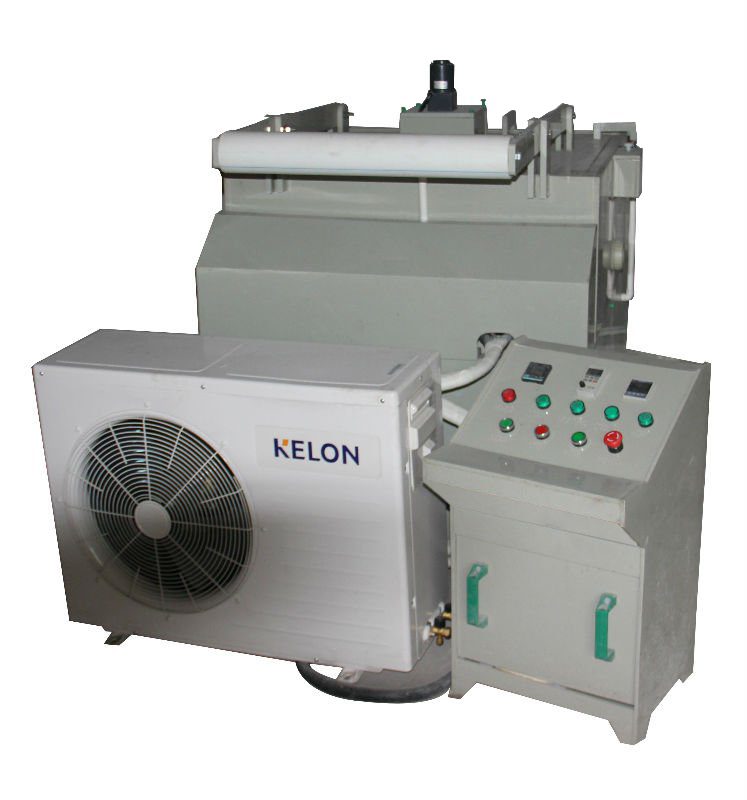
Precision Metal Etching Equipment
Higher-accuracy systems for filter mesh, nameplates, titanium and small-batch laboratory work.
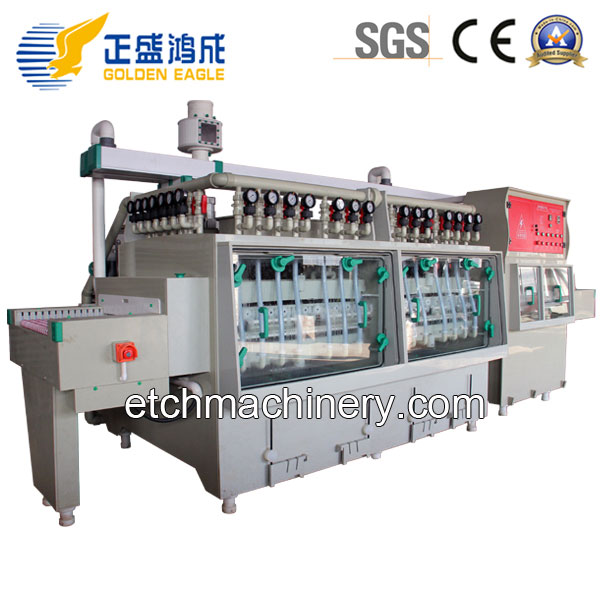


Group C
1 model
Industrial Chemical Milling Systems
Multi-chamber machines for long metal sheets, spinneret dies and extrusion tooling.

Group D
3 models
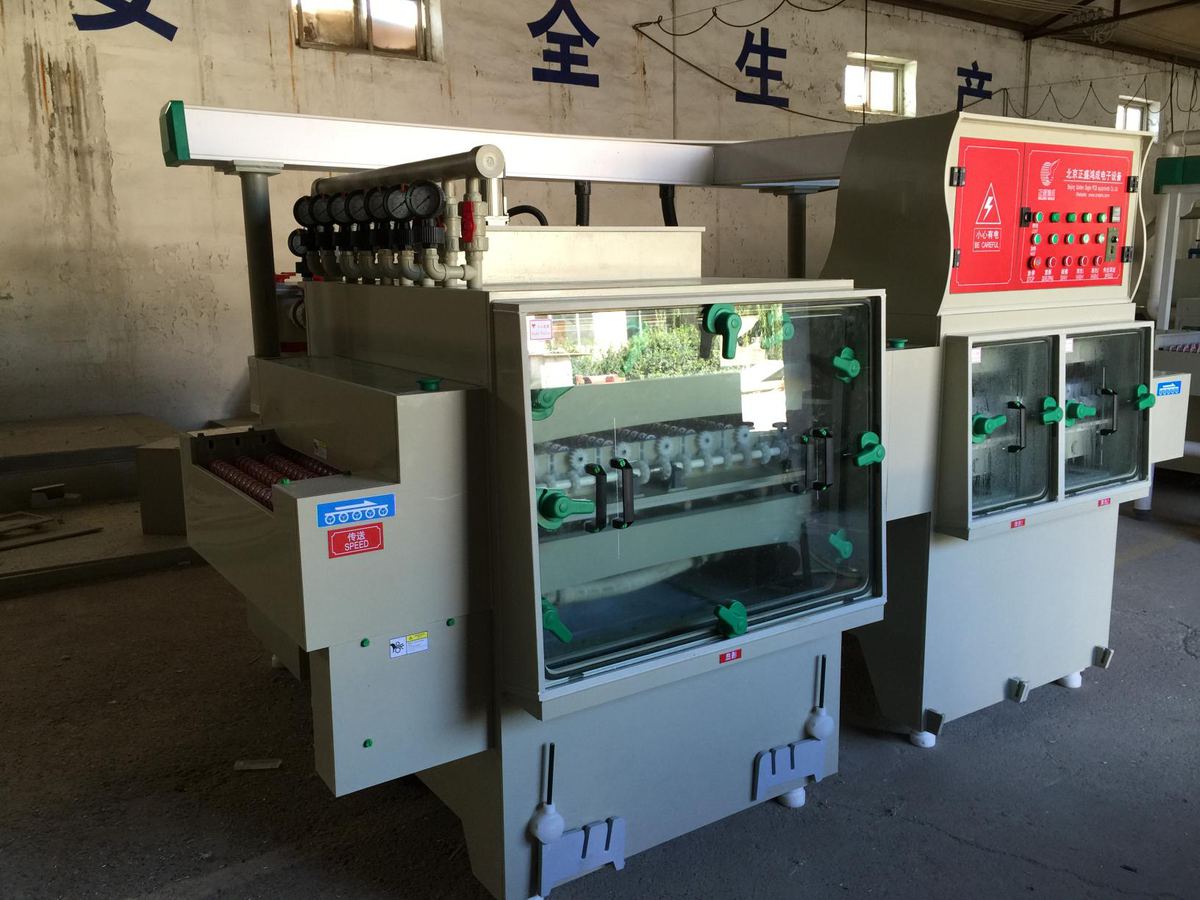
Die and Decorative Metal Etching Machines
Specialist equipment for flexible cutting dies, hot foil stamping dies and decorative panels.

Product Comparison
Metal Etching Machine Comparison Table
Working width, material thickness, tolerance and typical use for every machine in the metal etching range. Final configuration and price are confirmed by quotation.
| Model | Type | Working size | Material thickness | Tolerance | Typical use | Details |
|---|---|---|---|---|---|---|
| GE-JM650 | Conveyor spray etcher | 650 mm width (1000 / 1220 / 1550 mm) | 0.05 to 2 mm | 0.02 mm | Stainless steel, brass, copper, aluminium sheet | View details |
| GE-S650 | Double-side spray etcher | W 650 mm x unlimited length | Not specified on model page | ±0.02 mm | Nameplates, signage, decorative plates | View details |
| GE-SK9 | Ferric chloride etcher | 650 mm width (1000 / 1220 / 1550 mm) | 0.05 to 2 mm | 0.02 mm | Filter mesh, sieves, screens | View details |
| GE-SX650 | Plaque and nameplate etcher | 650 / 1000 / 1220 / 1550 mm | 0.05 to 2 mm | ±0.02 mm | Plaques, labels, grids, shims, sieves | View details |
| GE-JM650-T | Titanium etcher | 650 mm width x 850 mm height | 0.2 to 8 mm | Not specified on model page | Titanium parts, folding screens | View details |
| GE-FET500 | Laboratory fume hood station | 500 x 650 mm board | Not specified on model page | Not specified on model page | Laboratory, R&D, prototype batches | View details |
| GE-JM650-12chamber | 12-chamber chemical milling system | 650 mm width, long workpieces | 0.05 to 2 mm | 0.02 mm | Meltblown spinneret dies, extrusion tooling | View details |
| GE-DB5060 | Rotary cutting die etcher | 500 x 600 mm | 0.05 to 2 mm | 0.02 mm | Flexible cutting die preparation | View details |
| GE-TB3040 | Hot foil stamping die etcher | 300 x 400 mm / 500 x 600 mm | 0.05 to 4 mm | Not specified on model page | Copper, zinc, magnesium stamping dies | View details |
| GE-ED1500 | Decorative sheet etcher | 1550 mm width, full-size sheets | 0.05 to 2 mm | 0.02 mm | Decorative panels, elevator and architectural work | View details |
Tolerances above are the values published on each model page. Where a model page does not publish a tolerance or thickness range, the cell reads “not specified on model page” rather than carrying an assumed figure. Machine size, power and chemistry options are listed on the individual detail pages.
Materials We Process
Metal Etching Machine Materials
Each metal needs its own etchant concentration, temperature and dwell time. The range below lists the materials Golden Eagle equipment is configured for, and the machine family that suits each one.
Stainless steel
200, 300 and 400 series sheet and plate. Ferric chloride is the standard etchant; the GE-JM650 and GE-S650 platforms are configured for it directly.
Best fit: GE-JM650, GE-S650, GE-SK9
Copper
Pure copper and copper alloys, etched with ferric chloride or cupric chloride. Acid copper etching is used for high-volume decorative and electronic work.
Best fit: GE-JM650, GE-S650, GE-SK9
Brass
Brass sheet for plaques, nameplates, signage and labels. Because brass etches faster than stainless steel, bath temperature and conveyor speed are set lower.
Best fit: GE-S650, GE-SX650
Aluminium
Pure and anodised aluminium. Note that ferric chloride is not used on aluminium; an alkaline or other suitable bath is required for this material.
Best fit: GE-JM650, GE-S650, GE-ET1000
Titanium and titanium alloys
Acid-based spray etching for titanium parts, including foldable-screen mesh and precision components. Titanium needs a dedicated etch circuit rather than a ferric chloride bath.
Best fit: GE-JM650-T
Zinc, magnesium and copper die alloys
Low-melting alloys used for hot foil stamping dies, stencil plates and printing plates, etched to produce a sharp cutting edge or relief.
Best fit: GE-TB3040
Nickel and specialty alloys
Invar, Kovar and similar precision alloys can be processed. The specific chemistry and passivation route are confirmed against your alloy grade during quotation.
Best fit: GE-JM650, GE-ET1000
Steel and high-carbon steel plate
Prepared for cutting die and embossing die production, where the etched edge becomes the knife edge used in the following engraving step.
Best fit: GE-DB5060
Applications
Metal Etching Applications
Where chemically etched metal is used, and which machine family covers each job.
Metal nameplates and signage
Identification plates, logos, serial plates and architectural signage in stainless steel, brass and aluminium. One panel can carry many different designs.
Decorative stainless steel panels
Elevator interiors, kitchen splashbacks, wall panels, mirror, hairline and coloured finishes on full-size architectural sheets.
Precision filters, meshes and screens
Filter mesh, sieves, grilles, speaker grilles and micro-perforated sheets with fine hole patterns in a repeat across the panel.
Flexible cutting dies
Photoetched flexible knives for leather, paper, textile and packaging industries, prepared on a multi-stage cutting die line.
Hot foil stamping dies
Copper, zinc and magnesium blocks etched to a relief so the foil transfers a sharp, repeatable image.
Spinneret and extrusion dies
Meltblown die heads and polymer extrusion tooling with long, narrow etched channels and tight tolerance over the full length.
Electronic and shielding parts
Shields, grids, shims, encoders, choppers and SMT stencil apertures with fine, repeatable openings.
Medical and aerospace components
Thin titanium and stainless parts where burr-free edges and no tool marking are required on the finished component.
Jewellery, dials and watch cases
Fine-line patterns on brass, copper and stainless blanks for dials, cases and decorative items.
Selection Guide
How to Choose a Metal Etching Machine
Match your part to a machine family first, then confirm width, thickness and output on the model page.
| Your requirement | Recommended model | Why |
|---|---|---|
| Stainless steel, copper or brass sheet | GE-JM650 / GE-S650 | Conveyor spray etching with acid or alkaline chemistry and the widest material coverage. |
| Precision filter mesh, sieves and screens | GE-SK9 | Ferric chloride and cupric chloride circuits tuned for fine mesh patterns. |
| Laboratory, R&D or small prototype batches | GE-FET500 | Fume hood enclosure for safe small-batch work rather than continuous production. |
| Meltblown die heads and long workpieces | GE-JM650-12chamber | 12-chamber configuration holds etch uniformity along long metal sheets. |
| Titanium parts and folding screens | GE-JM650-T | Acid-based titanium etch circuit with a larger working height. |
| Flexible cutting dies | GE-DB5060 | Rotary single-side photoengraving for steel and high-carbon steel die plates. |
| Hot foil stamping dies | GE-TB3040 | Configured for copper, zinc, magnesium and stencil plates. |
| Metal plaques, nameplates and labels | GE-SX650 | Fine-line plaque etcher down to a 0.05 mm line width. |
| Large decorative stainless steel sheets | GE-ED1500 | 1550 mm working width for full-size architectural panels. |
Three numbers decide the machine. First, the largest workpiece — the sheet must fit between the side guides, so width and length matter more than the chamber count. Second, the material thickness, which sets the etch rate and therefore the conveyor speed you can run. Third, the required output, measured in panels per hour, which decides how many chambers and how much tank volume you need.
Chemistry is the fourth decision. Ferric chloride handles stainless steel and copper, cupric chloride suits copper and is easier to regenerate, alkaline chemistry is used on aluminium, and titanium needs an acid-based circuit. Machines can be ordered with more than one chemistry circuit and quick-change tanks, but specifying the correct chemistry up front keeps the quotation accurate.
Finally, look at the whole line, not only the etcher. A working metal etching process also needs cleaning, coating, exposure, developing, etching, stripping and drying, plus a wastewater treatment plant. Compare the full etching equipment range or read the etching line facility planning guide before you commit to a layout.
Process
Chemical Etching Process for Metal
The steps that run before, during and after the etcher. Only the etching step itself takes place inside the metal etching machine; the other stages are separate machines on the same line.
1
Clean and degrease
Oil, dirt and oxidation are removed so the resist bonds evenly and the etchant attacks only the masked areas.
2
Coat the photoresist
Liquid photoresist is screen-printed or roller-coated onto both faces of the sheet.
3
Expose and develop
The artwork is transferred by UV exposure, and the exposed resist is developed away to open the areas to be etched.
4
Spray etch
Inside the machine the sheet travels on the roller conveyor while oscillating nozzles sweep etchant over both faces at a controlled temperature.
5
Strip, rinse and dry
Resist is stripped, the part is rinsed and dried, and the etched component is inspected before finishing.

On the main conveyor models the working temperature is set from room temperature up to 65 ℂ, the conveying speed is adjusted on the line from 0 to 6 m/min, and the spray pressure is read from the gauge panel on the chamber. A typical ferric chloride bath on copper runs at an etch rate of roughly 25 to 50 µm/min, which is why conveyor speed and bath temperature are the two controls that most directly determine how a pattern develops.
Etchant recovery matters as much as etch speed in a production line. Etchant regeneration systems and closed-loop chemistry circuits reduce consumption and keep concentration stable across long runs, while wastewater treatment is needed to bring the rinse water back into compliance. Read the chemical milling process guide for the chemistry detail behind each step.
Why Choose Golden Eagle
Industrial Metal Etching Equipment Manufacturer
Beijing Golden Eagle Electronic Equipment Co., Ltd. has manufactured chemical etching equipment since 2003 and ships to customers in more than 30 countries.
Manufacturing in Beijing
Machine assembly, tank fabrication and spray system build-up are done in our own workshop, so process knowledge sits with the people who build the equipment rather than with an intermediary.

Process know-how in the machine
Double-side spray with oscillation, titanium heating and cooling circuits, and pressure and temperature control are standard on the conveyor platforms rather than options bolted on later.

Chemistry and dosing support
An in-house laboratory develops etchant concentration, temperature and dwell time for your material and part, and the dosing and regeneration systems are specified to match that recipe.
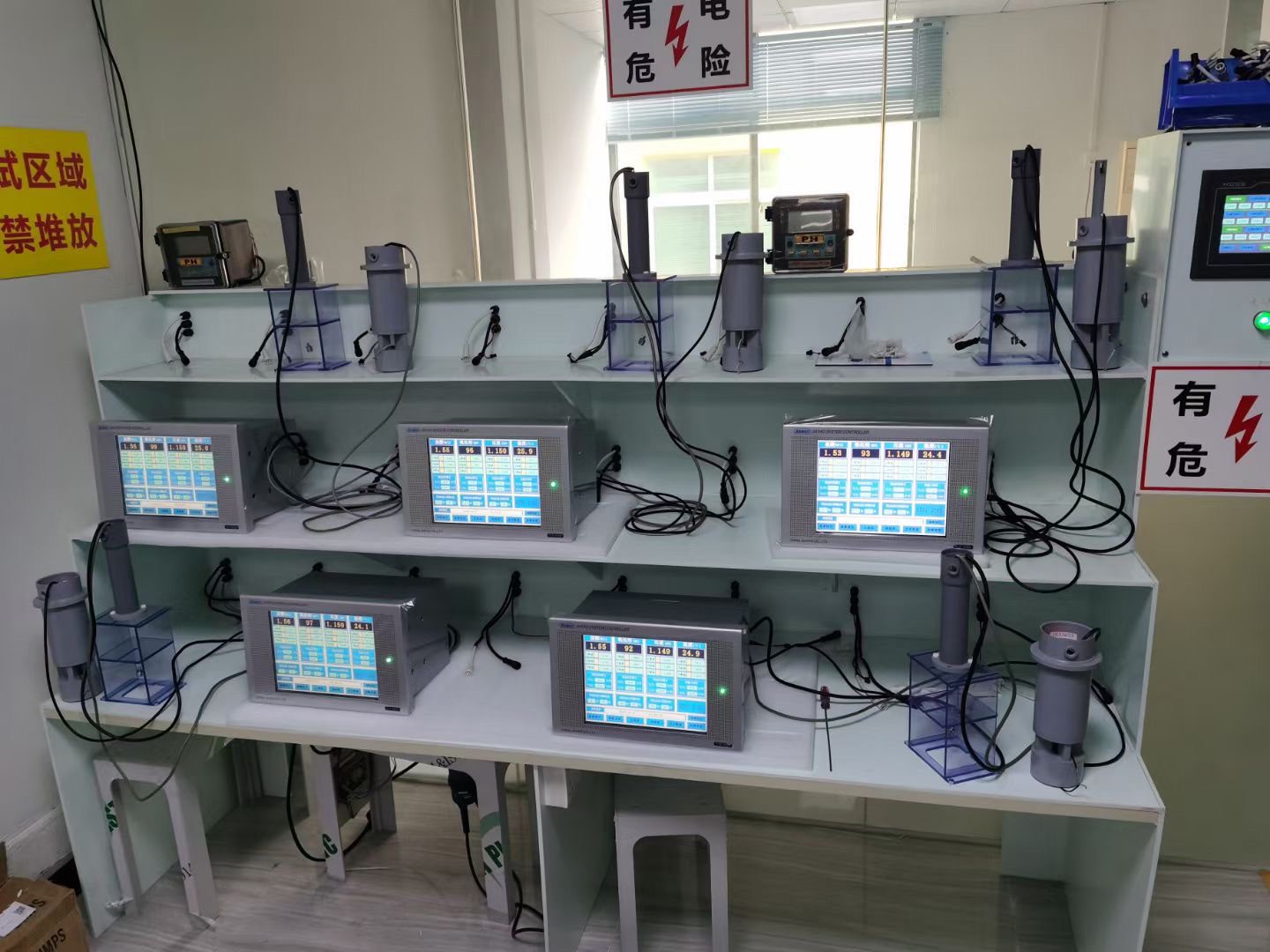
CE certification and warranty
Machines are supplied with CE certification, an English operation manual, on-site commissioning support and a 12-month warranty. Spare parts and technical support remain available for the life of the equipment.
Training and after-sales support
Operator training, process optimisation, preventive maintenance and remote assistance are provided, along with etching recipes and operating documentation for each supported material.
Export and delivery
Equipment is delivered worldwide under FOB Beijing, CIF or DAP terms. Standard lead time is 15 to 30 days for manufacturing, plus 15 to 45 days for international shipping depending on destination.
Videos and Case Studies
Metal Etching Machine in Production
Real footage from the Beijing Golden Eagle YouTube channel, showing the machines and the process as they run.
How to Etch Decorative Metal Sheets: Full-Size SS sheet, Copper & Aluminum
Full-size stainless steel, copper and aluminium sheet etched on the large-format line. 2 min 35 s, published 29 September 2020.
Industry chemical milling process — real shot of etching factory
Footage of the chemical milling process and the working etching factory. 2 min 46 s, published 19 May 2025.
12 chamber etching machine for Spinneret Extrusion Meltblown Die
The 12-chamber chemical milling system used for meltblown spinneret dies. 2 min 11 s, published 12 March 2024.
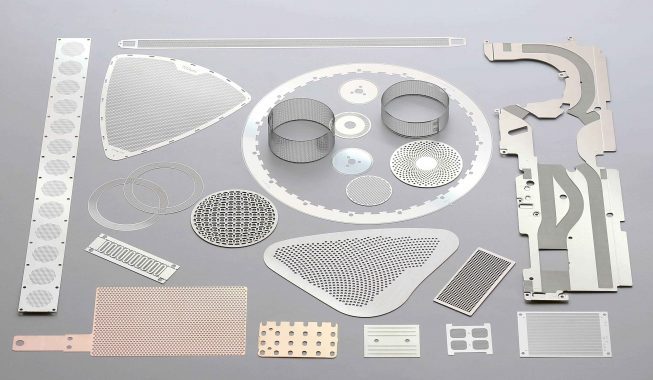
These parts were all produced on Golden Eagle machines: etched stainless and aluminium nameplates, perforated speaker grilles, filter mesh, brushed and etched decorative sheets, bipolar plates and chemically milled copper. More application galleries are available on the case studies page, and the process background is covered in metal etching technology and aluminium etching.
Frequently Asked Questions About Metal Etching Machines
What is a metal etching machine?
A metal etching machine is an industrial system that removes selected areas of a metal sheet by controlled chemical reaction instead of mechanical force. The design is first transferred onto the sheet as a protective photoresist, then the exposed metal is dissolved by an etchant while the masked areas stay untouched. Because no tool presses against the workpiece, the process leaves no mechanical stress, which makes it suitable for thin sheet and fine detail. On Golden Eagle conveyor machines the part travels on a roller conveyor through spray chambers while oscillating nozzles sweep etchant across both faces.
What metals can be processed by chemical etching?
The Golden Eagle range is configured for stainless steel, copper, brass, aluminium, titanium, zinc, magnesium, nickel and specialty alloys such as Invar and Kovar, plus steel and high-carbon steel plate for die work. The etchant is matched to the metal: ferric chloride for stainless steel and copper, cupric chloride for copper work, alkaline chemistry for aluminium, and an acid-based circuit for titanium. We confirm the exact alloy grade and chemistry route against your part during quotation.
What is the difference between spray etching and immersion etching?
In spray etching the etchant is delivered under pressure through oscillating nozzles directly onto the workpiece, which gives faster and more uniform removal and is what the conveyor machines in this range use. In immersion etching the part simply sits in the bath, so removal is slower and depends on bath circulation to reach both faces evenly. Spray etching suits production volumes and pattern repeats; immersion is more often used for small batch or specialist laboratory work.
How do I choose a metal etching machine for stainless steel?
For stainless steel sheet the GE-JM650 and GE-S650 platforms are the usual starting point because they support ferric chloride chemistry, and the GE-SK9 is the option when the part is filter mesh, a sieve or a screen with fine holes. The decisions that follow are the largest sheet you need to process, since the sheet must fit between the side guides, the material thickness, and the output in panels per hour. A tolerance of 0.02 mm is published on these models.
Can one machine process stainless steel, copper and brass?
Yes. The GE-JM650 and GE-S650 are published as supporting both acid and alkaline chemistry, so stainless steel, copper and brass can be run on the same machine by changing the bath and adjusting temperature and conveyor speed. The one material that needs a different circuit is aluminium, which is not etched in ferric chloride and needs an alkaline or other suitable bath. Machines can be ordered with additional chemistry circuits and quick-change tanks if you need more than one chemistry in production.
What information is needed to select a metal etching machine?
The useful details are the metal and its grade, the largest workpiece length and width, the material thickness, the smallest feature or line width in the drawing, the required output in panels per hour, and the finish you need on the part. If the part is a repeat across a panel, indicating the repeat pitch helps us size the chamber correctly. Drawings or sample parts are welcome and are the fastest route to an accurate specification and quotation.
Can Golden Eagle customize the working width and production capacity?
Working width options of 650, 1000, 1220 and 1550 mm are available across the standard conveyor platforms, and several models list the width as orderable. Capacity is adjusted by chamber length and tank volume rather than by width, so the number of chambers and the bath size are configured to match the output you need. The GE-JM650-12chamber is the example of a long-workpiece configuration built for meltblown spinneret dies. Final dimensions are confirmed in the quotation.
How can I get a quotation for a metal etching machine?
Send us the metal, the workpiece size, the thickness, the required output and the application, and we will reply with a specification and price within 24 hours. You can use the request form at the bottom of this page, email etchmachinery@163.com, or message us on WhatsApp at +86 15010608128. Prices depend on working width, chamber configuration, chemistry and automation level, so the quotation is prepared against your actual part rather than a list price.
Discuss your production requirements
Request a Metal Etching Machine Quotation
Tell us the metal, the workpiece size, the material thickness, the required output and the application. Our team will review it and point you to the machine pages and configurations that fit, then quote it within 24 hours.
- Metal and grade (stainless steel, copper, brass, aluminium, titanium)
- Maximum workpiece length and width
- Material thickness and smallest feature
- Expected output in panels per hour
- Required etchant chemistry and line configuration
- Destination for FOB, CIF or DAP terms
Get a reply within 24 hours
Request a Quote Email Our Team WhatsApp: +86 15010608128Please include drawings or process details if available. Final specifications and pricing are confirmed by quotation.