
How to choose a PCB brushing machine: 5 key specifications (brush grit, pressure, conveyor speed, panel width, utilities) compared. Includes cost vs ROI analysis and common mistakes to avoid.
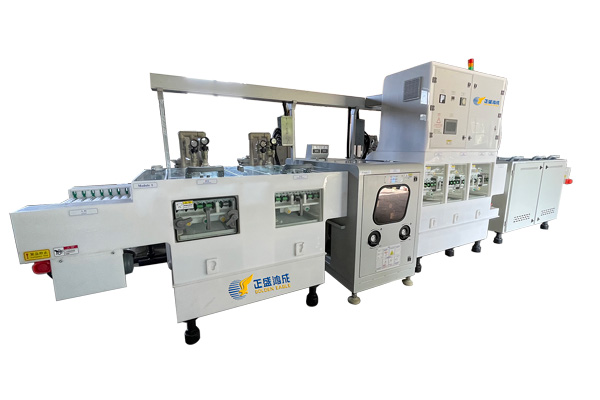
The PCB brushing machine is a critical pre-treatment step before electroless copper plating, ENIG, and solder mask. The wrong brush type or pressure will either under-roughen the copper (causing plating delamination) or over-roughen it (causing copper loss on fine traces). Selecting the right equipment is therefore as important as selecting the right chemistry.
1. Brush material & grit: nylon 600-grit for standard FR4, nylon 800-grit for HDI, aluminum-oxide 1000-grit for flex. Soft brushes for fine-line, hard brushes for heavy copper.
2. Brush pressure control: pneumatic 0–5 bar adjustable, or servo-controlled 0.1–2.0 kg load per cm of brush length. Pneumatic is cheaper, servo is more repeatable.
3. Conveyor speed: 0.5–5.0 m/min variable. For mass production, 2–3 m/min is typical. For prototype lines, 0.5–1.5 m/min.
4. Panel width capacity: 400 / 500 / 600 / 650 mm. Choose based on your largest panel size + 50 mm clearance.
5. Water & air utility: DI water 30–80 L/min, compressed air 0.5–0.7 MPa, exhaust ventilation 1500–3000 m³/h. Make sure your facility has these utilities ready.
An inline brushing machine connects directly to your DES line or ENIG line via shared conveyor and PLC. Higher throughput, lower labor cost, but requires matched-height integration.
A standalone brushing machine is a separate module loaded by operator. Lower capital cost, more flexible for small batch, but requires manual handling.
Mistake 1: choosing brush grit by price, not by application. A 320-grit brush is too coarse for HDI; a 1200-grit brush is too fine for FR4 heavy copper.
Mistake 2: ignoring the water quality. Hard-water calcium will deposit on the brush and scratch the copper. Always use DI water.
Mistake 3: under-specifying the exhaust. Brush dust must be removed by a 2000+ m³/h exhaust to prevent contamination of the next process step.
For a mid-size PCB shop running 5,000 m²/month of multilayer board, a $15,000 USD inline brushing machine pays back in 12–18 months through: (a) reduced manual brushing labor (1 operator eliminated), (b) reduced ENIG re-work rate, (c) reduced customer rejects on plating adhesion. A standalone $8,000 USD unit pays back in 24–36 months but offers more flexibility.
When buying a PCB brushing machine, prioritize brush material and pressure control first, conveyor speed second, and brand reputation third. Beijing Golden Eagle supplies both inline and standalone PCB brushing machines from 400 to 650 mm width, with full integration to your existing DES or ENIG line.
They are similar terms. A brushing machine uses rotating brushes to roughen the copper surface; a scrubber often adds a wet chemical or pumice slurry to enhance cleaning. For modern PCB pre-treatment, dry brushing with DI water rinse is the industry standard.
Yes, but you need quick-change brush heads (5 minute swap) and a brush-pressure range that covers both FR4 (1–3 kg/cm) and flex (0.3–1.0 kg/cm). Beijing Golden Eagle supplies quick-change brush systems as an option.
Look for: emergency stop on all four corners, brush-guard interlock, exhaust ventilation interlock, water-leak sensor, conveyor jam sensor, and CE / UL / CSA certification. All Beijing Golden Eagle machines include these by default.
Yes. We offer on-site commissioning for overseas buyers, plus remote video support, English operation manual, and lifetime technical assistance. Spare parts are stocked in our Beijing warehouse and shipped by DHL within 3–5 days worldwide.