
How to Make a Flexible Cutting Die: 8-Step Photochemical Process Guide
A flexible cutting die is made by (1) designing the cut profile in CAD, (2) creating a 1:1 photo-tool on film, (3) cleaning and coating photoresist onto a pre-bent spring-steel rule, (4) UV-exposing the photoresist through the photo-tool, (5) developing the unhardened resist, (6) spray-etching the exposed steel rule with 42-45 °Bé ferric chloride (FeCl3) until the cut profile is fully formed, (7) stripping the remaining resist, and (8) beveling, demagnetizing, mounting on a PVA or PET flexible substrate, and final QC. Cycle time is 4-8 hours per die.
A flexible cutting die — also called a rotary die , or flexible die — is the cutting tool inside a label or packaging machine that punches shapes out of paper, film, foil, and laminate. Every pressure-sensitive label on a bottle, every sticker on a laptop, and every die-cut cardboard insert in a cosmetics box was made with one. Despite a long history (the technology dates from the 1950s), most flexible dies today are still made by an 8-step photochemical process that combines CAD, photo-tooling, photoresist, and chemical etching — a process very similar to making printed circuit boards.
Key Takeaways
- Flexible cutting dies are made by photochemical etching of spring-steel rule, not by laser or mechanical carving.
- PVA foam is the standard base material; PET is 2-3x longer lasting; birch plywood is for rigid work.
- Steel rule thickness is 0.71 / 1.07 / 1.42 mm depending on substrate; 7-10 mm rule height.
- Etching chemistry is 42-45 °Bé ferric chloride (FeCl3) at 35-45 °C, spray pressure 2-3 bar.
- A complete die takes 4-8 hours of active production; a single die costs USD 30-300 depending on size.
What Is a Flexible Cutting Die?
A flexible cutting die is a thin, semi-rigid cutting tool made by mounting bent spring-steel rule on a flexible foam or plywood substrate. It is wrapped around a magnetic cylinder inside a rotary die-press and rotates at 100-500 cycles per minute to cut labels, stickers, gaskets, and packaging shapes out of paper, film, foil, and laminate.
The die has three parts: the cutting rule (hardened spring steel, 0.5-1.5 mm thick, 7-10 mm tall), the substrate (PVA foam, PET foam, or birch plywood, 0.5-18 mm thick), and the carrier (a thin reinforcing layer that holds everything together and lets the die wrap around the magnetic cylinder without cracking).
Modern flexible dies are used wherever short to medium run lengths of labels and packaging are needed. A single flexible die can cut 100,000 to 1,000,000 impressions before re-sharpening, and dies can be re-sharpened 5-20 times depending on substrate and material being cut. Compared to flatbed (laser) dies — which are rigid plywood boards for flat platen presses — flexible dies run faster and are cheaper to make in small batches but wear out faster.

Materials: Steel Rule, PVA, PET, Birch Plywood
The right material combination is the single biggest decision in flexible die quality. Wrong material means short die life, poor cut quality, or expensive tooling scrap. The four main material choices are below.
| Material | Thickness | Cost Index | Die Life | Best Use |
|---|---|---|---|---|
| Spring steel rule (AISI 1095) | 0.71 / 1.07 / 1.42 mm | 1.0× | Re-sharpening 5-20× | Universal — all flexible dies |
| PVA foam (polyvinyl alcohol) | 0.5-1.0 mm | 0.4× | 50,000-200,000 cuts | Labels, stickers, short-run packaging |
| PET foam (polyethylene terephthalate) | 0.5-1.0 mm | 1.4× | 200,000-500,000 cuts | High-volume labels, premium packaging |
| Birch plywood | 12-18 mm | 1.8× | Rigid, no flex | Flat platen (laser) dies only |
| Phenolic resin board | 10-15 mm | 2.0× | Very long | Heavy industrial flat dies |
| Composite (PVA + paper honeycomb) | 8-12 mm | 1.6× | Medium | Custom hybrid dies |
Steel rule choice depends on what is being cut: 0.71 mm for labels and stickers (clean cuts on paper and film up to 200 gsm), 1.07 mm for carton and box work (3-ply corrugated and folding carton up to 800 gsm), 1.42 mm for heavy corrugated and thick plastic sheets. The rule is bent on a CNC die-bending machine to the exact cut profile before being mounted on the substrate.
The 8-Step Manufacturing Workflow
Flexible cutting dies are made by photochemical etching — the same process used for printed circuit boards and metal nameplates. Each step has its own machine and chemistry; skipping a step or combining steps is possible for prototypes but commercial quality requires each step to be properly controlled.
| # | Step | Process | Machine | Time |
|---|---|---|---|---|
| 1 | CAD design | Draw die profile in 1:1 with cut rules, bridge width, perf patterns, creasing rules | Die-bending CAD software | 1-2 hours |
| 2 | Photo-tool | Plot artwork on high-resolution film at 1:1, 4060 dpi minimum | Image-setter or film plotter | 10-30 minutes |
| 3 | Steel prep | Remove oil/grease contamination from the surface of metal sheets/plates. | brushing machine | 10-20 minutes |
| 4 | Photoresist | Laminate dry-film /Liquid photoresist over the substrate | Dry-film laminator | 10-20 minutes |
| 5 | Exposure | UV expose through the photo-tool; hardened areas remain, soft areas wash off | UV LED exposure machine | 30-60 seconds |
| 6 | Developing | Spray sodium carbonate to wash off unhardened photoresist | Spray developing machine | 1-3 minutes |
| 7 | Etching | Spray ferric chloride to dissolve exposed steel rule profile | Spray etching machine | 30-60 minutes |
| 8 | Stripping + beveling + QC | Strip resist, bevel cut edges, demagnetize, final QC | Stripping tank + beveling machine | 1-2 hours |
Total active production time for a single die is 4-8 hours depending on die size and complexity. For volume production of identical dies, the same photo-tool can be reused hundreds of times and each repeat cycle drops to 2-3 hours of active work.

Step 7 Deep Dive: Etching Chemistry
The etching step is the heart of the process. The standard etchant for flexible dies is ferric chloride (FeCl3) at 42-45 °Bé (specific gravity 1.42-1.45), sprayed at 35-45 °C and 2-3 bar pressure. Etch rate is 30-50 µm/min on the exposed steel rule face. Edge profile is conical with about 5-8° sidewall taper — enough to clear cut material but sharp enough to maintain a clean cut edge over the die life.
Etch factor (depth-to-side-cut ratio) is controlled by FeCl3 concentration, temperature, and spray pressure. Too low a temperature gives a shallow etch and burr on the cut edge; too high gives rough sidewalls and faster but less controlled etch. A 42-43 °Bé bath with pH <1 and ORP >+500 mV gives the cleanest cut profile for flexible dies.
Etching vs Laser: Which Should You Choose?
Most modern flexible dies are made by chemical etching, but laser cutting is competitive for certain use cases. The two methods are not interchangeable — each has clear strengths.
| Parameter | Chemical Etching | Laser Cutting |
|---|---|---|
| Min feature size | 0.3 mm | 0.1 mm |
| Tolerance | ±0.05 mm | ±0.02 mm |
| Max rule thickness | 1.5 mm practical | 2.0+ mm |
| Heat-affected zone | None | 0.05-0.15 mm (dulls rule) |
| Tooling cost per die | USD 30-150 | USD 100-400 |
| Break-even run length | 10-5,000 dies | 5,000-50,000+ dies |
| Complex profiles | Excellent (undercuts, bridges, perf patterns) | Limited (depends on laser access) |
| Creasing rules | Difficult — requires secondary process | Easy — same laser pass |
| Per-die cycle time | 2-8 hours | 10-60 minutes |
Use chemical etching when: run length is 10-5,000 dies, profile has undercuts or bridges, the cut profile is complex, and tooling cost matters more than cycle time.
Use laser cutting when: run length is over 5,000 identical dies, you need very tight tolerance (<0.05 mm), or the die has creasing rules that need to be made in one pass.
Cost and Cycle Time
The economics of flexible cutting dies are driven by tooling cost, run length, and per-die cycle time. The table below models a typical commercial flexible die operation.
| Cost Driver | Single Die (prototype) | Batch of 100 | Batch of 1,000 |
|---|---|---|---|
| CAD + photo-tool | USD 60-120 | USD 60-120 (amortized 0.6-1.2/die) | USD 60-120 (amortized 0.06-0.12/die) |
| Steel rule + PVA substrate | USD 15-25 | USD 15-25 | USD 12-18 (volume) |
| Photoresist + developer + etchant | USD 3-5 | USD 1.5-2.5 | USD 0.8-1.2 |
| Etching chemistry + utilities | USD 4-8 | USD 2-3 | USD 1.2-1.8 |
| Labor (4 hours, USD 8/hr) | USD 32 | USD 12 (amortized over batch) | USD 4 (amortized) |
| Beveling, QC, finishing | USD 10 | USD 4 | USD 2 |
| Total per die | USD 124-200 | USD 95-167 | USD 80-127 |
| Total batch cost | USD 124-200 | USD 9,500-16,700 | USD 80,000-127,000 |
A typical commercial flexible die for label cutting costs USD 80-200 fully loaded, with volume production dropping the per-die cost to USD 30-80 at 1,000+ batch size. Lead time from approved artwork to finished die is one 8-hour shift; rush orders can be turned in 2-3 hours with a pre-made photo-tool.
Industry Applications
Flexible cutting dies serve the highest-volume sectors of the packaging and labeling industry. The five largest end-uses are below.

Pressure-Sensitive Labels
The largest flexible die market: bottle labels, product labels, warning labels, barcode labels, and shipping labels. Common materials are paper, BOPP, PET, vinyl. Cycle life 50,000-200,000 cuts.

Folding Carton & Box Inserts
Folding cartons for cosmetics, pharmaceuticals, electronics, food packaging, and luxury goods. Cut profile plus creasing rules plus perf patterns in one die. Cycle life 200,000+ cuts.
Vinyl Stickers & Decals
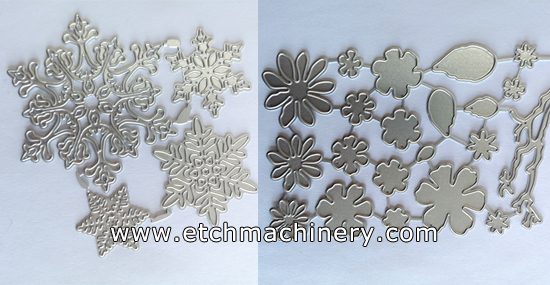
Custom stickers, laptop decals, car decals, wall art, and packaging stickers. High precision needed for small intricate shapes. Cycle life 30,000-100,000 cuts on PVA substrate.
Industrial Gaskets & Seals
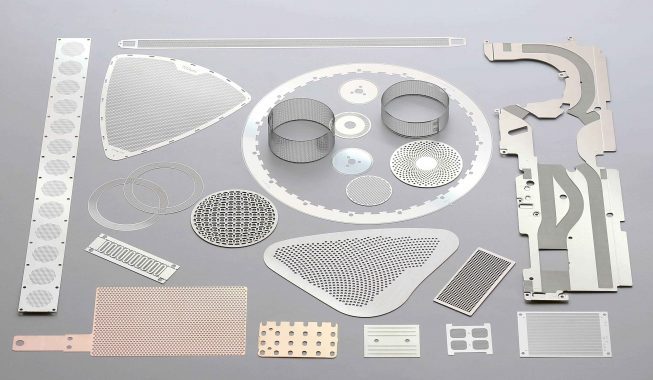
Foam gaskets, rubber gaskets, and EMI/RFI shielding gaskets for electronics, automotive, and HVAC. Common flexible die cut profile for thin conductive gaskets up to 1 mm thick.
Golden Eagle Equipment Lineup
Beijing Golden Eagle supplies complete flexible cutting die manufacturing lines covering every step of the 8-step process. The lineup below is the standard 8-12 machine scope for a 50-200 die/day capacity line.
Flexible Die Production Equipment
Production equipment used in the flexible cutting die manufacturing workflow:
-
 Step 3
Brushing Cleaning Machine
GE-B650
-
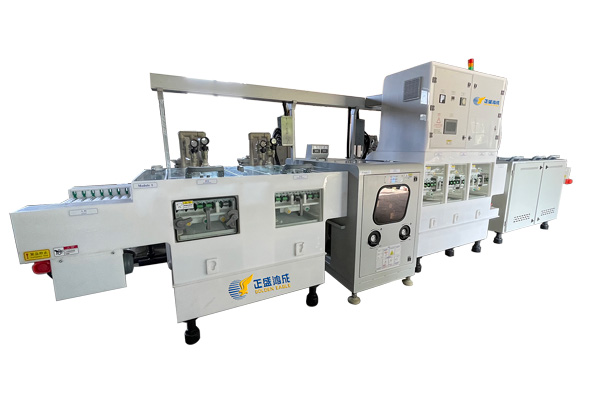
Step 7
Flexible Dies Etching Machine
GE-FD650, 500-650 mm width
-
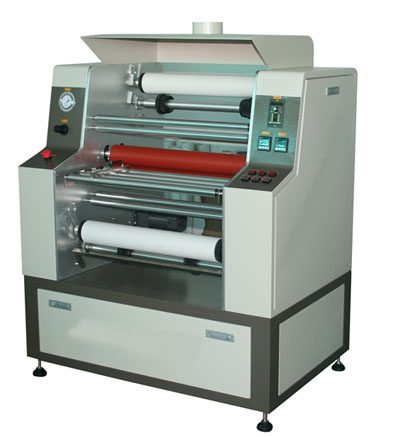 Step 4
Dry Film Photoresist Laminator
GE-DRL series, hot roll lamination
-
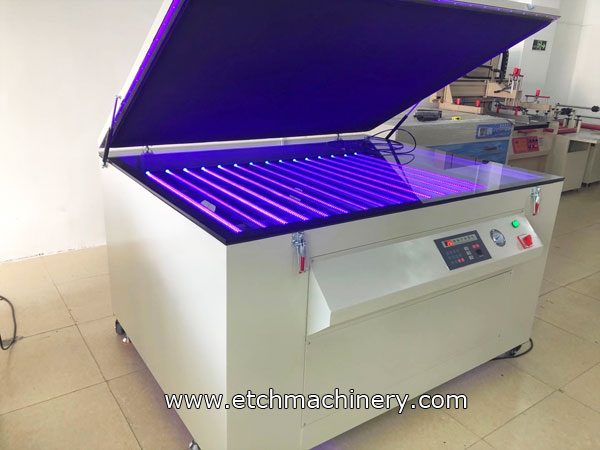 Step 5
UV LED Exposure Machine
GE-LED series, 365-405 nm
-
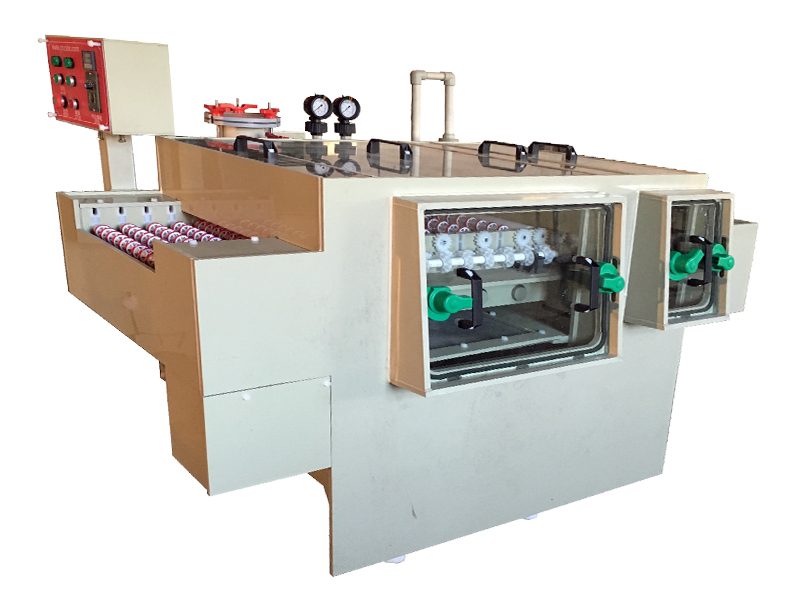 Step 6
Spray Developing Machine
GE-D650W, sodium carbonate
-
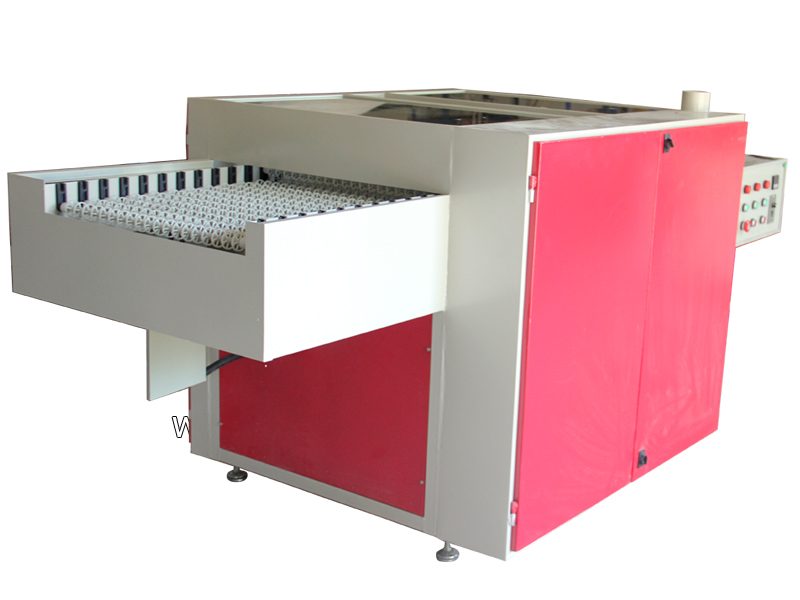 Step 8
Hot Air Drying Machine
GE-HAD650, post-etch drying
Frequently Asked Questions
What is a flexible cutting die?
A flexible cutting die (also called a rotary die or laser die) is a thin steel cutting tool used in the packaging and printing industry to die-cut labels, cartons, stickers, gaskets and printed sheets. It consists of a 0.5–1.0 mm spring steel rule bent to the cut profile, mounted on a flexible substrate such as PVA or PET foam, so it can be wrapped around a magnetic cylinder on a rotary die-press.
What is the best material for a flexible cutting die base?
The most common base materials are PVA foam (polyvinyl alcohol, 0.5–1.0 mm thickness, medium density), PET foam (polyethylene terephthalate, harder and longer-lasting), and solid birch plywood for high-volume rigid dies. PVA is the cheapest and most common for label cutting. PET lasts 2-3x longer. For self-adhesive label and short-run packaging work, PVA is the industry standard.
How long does it take to make a flexible cutting die?
A typical flexible cutting die takes 4-8 hours of active production time: 1-2 hours for CAD design and photo-tool, 30-45 minutes for sheet preparation and lamination, 60-90 minutes for exposure and developing, 30-60 minutes for etching, 30-45 minutes for stripping and finishing, 1-2 hours for beveling, and 1 hour for final assembly. The whole cycle from approved artwork to finished die is typically a single 8-hour shift.
What steel rule thickness is used for flexible cutting dies?
Common steel rule thicknesses are 0.71 mm (0.028″, PT 28) for label and sticker work, 1.07 mm (0.042″, PT 42) for carton and box work, and 1.42 mm (0.056″, PT 56) for heavy corrugated. The rule height is typically 7-10 mm. The rule is bent on a die-bending machine to the cut profile before being mounted on the flexible base.
How is a flexible cutting die different from a flatbed die?
A flatbed (laser) cutting die has steel rules mounted on a rigid plywood or metal base 12-18 mm thick and used in a flat platen press. A flexible cutting die has steel rules mounted on a thin flexible substrate (PVA/PET foam, 0.5-1.0 mm) and is wrapped around a magnetic cylinder for rotary die-cutting. Flexible dies run faster (200-500 cycles/min vs 30-80 cycles/min for flatbed), cut smaller repeat patterns, and are cheaper for label work but wear faster.
What is the difference between etching and laser cutting for die boards?
Chemical etching uses photoresist and ferric chloride (FeCl3) to dissolve exposed steel rule profiles — best for short runs of 10-500 dies, complex profiles with undercuts, and creasing rules. Laser cutting uses a CO2 or fiber laser to cut steel directly — best for thicker rules (>1.5 mm) and very long runs where tooling cost amortizes. Etching cost is lower per die for small runs; laser cost is lower per die for runs of 5000+. Etching tolerance is ±0.05 mm; laser tolerance is ±0.02 mm but with heat-affected zone that dulls the rule faster.
Can Golden Eagle supply flexible cutting die equipment?
Yes. Beijing Golden Eagle supplies conveyor spray etching machines for steel-rule die boards (GE-CD650, 500-650 mm width), rotary turntable etching machines for short run flexible dies (GE-CDR450), and complete flexible cutting die production lines with photoresist lamination, exposure, developing, etching, stripping and beveling equipment. Lines ship in 90-120 days with on-site installation and lifetime support.